 Exclusive villa
Boutique hotel · Investment · Cenote
$6,500,000 USD
View property
The two reef-protected bays north of Tulum: a calm reef lagoon (2-4 m), Casa Cenote (Cenote Manati), turtles nesting from August to November and low density locked in by law — 12 m max height, no golf courses, no docks. 9 verified properties: beachfront villas from $2.99M USD and residences from ~$355K USD. ~10 minutes from Tulum town.
Tankah and Soliman Bay are the two reef-protected residential bays north of Tulum, about 10 km from town (~10 minutes via federal highway 307). They correspond to the Tankah III subdivision —the bay of Casa Cenote (Cenote Manati), entrance at km 237-238— and Tankah Cuatro (Punta Soliman, ZIP 77772, entrance at km 242), separated by the Punta Soliman headland. The Mesoamerican Reef —the world's second-largest barrier reef— forms a reef lagoon in front of both bays — the shallow (2-4 m), calm band of water that appears when coral encircles the shore and dampens the waves and currents. Over that seabed grow seagrass meadows where green and hawksbill turtles feed; green turtles nest on Tankah's beaches from August to November. AFAR called Soliman “Mexico's hidden beach”: more residents than tourists along just over a mile of shoreline.
The Nautilus portfolio in the corridor includes 9 verified properties: in Tankah Bay, Casa Cenote (an operating boutique hotel next to the cenote, $6.5M USD), Villa Amara (5-bed oceanfront), Villa Arghy (4-bed turn-key), ACALAI Beach Residences (operated by Grand Aston) and Bahia Tulum (17 residences delivered in 2024); in Soliman Bay, Hacienda Caracol (10-bed villa hosting 24 guests), Sueño del Mar (Mediterranean 6-bed villa), NEEA (8 design residences by Sebastien Robert) and Maranta (18 apartments with solar panels and Starlink). Range: from ~$355,000 USD to $6,500,000 USD.
The structural differentiator is regulatory: the strip is governed by the POET Cancun-Tulum (UGA 7) under Conservation policy —12 m max height, 30 rooms/ha density, land clearing capped at 15%, golf courses and docks prohibited— and in Soliman Bay protected mangrove limits development to a single line of beachfront villas. Local brokers consider it one of Tulum's last developable beachfront strips: south of Tulum, the Sian Ka'an biosphere reserve blocks the coastline. New connectivity: Tulum International Airport (TQO, ~40-50 min) moved 1.25 million passengers in 2025, the Maya Train has a station north of town, and the Tulum ruins are ~10 minutes away.
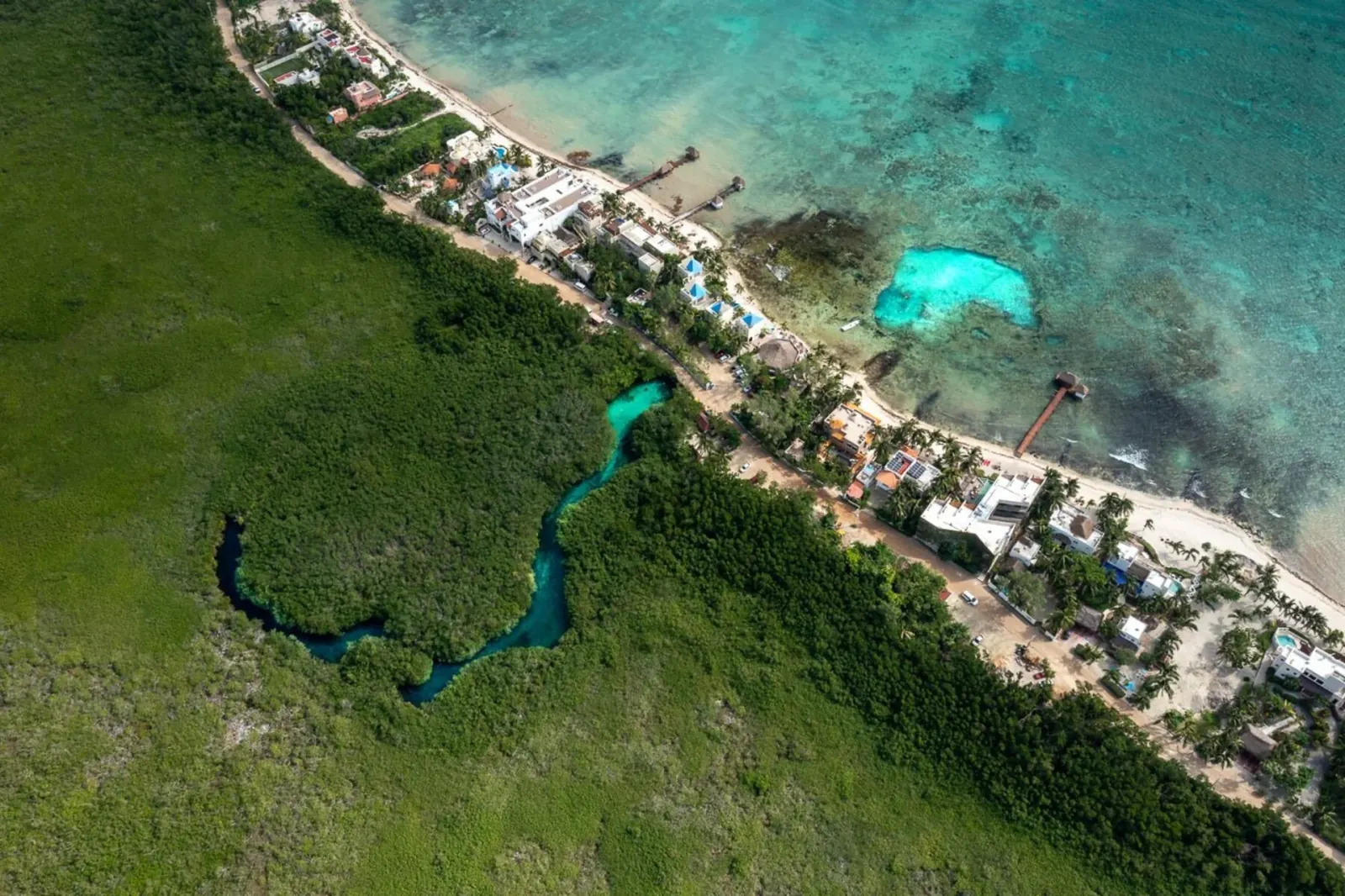
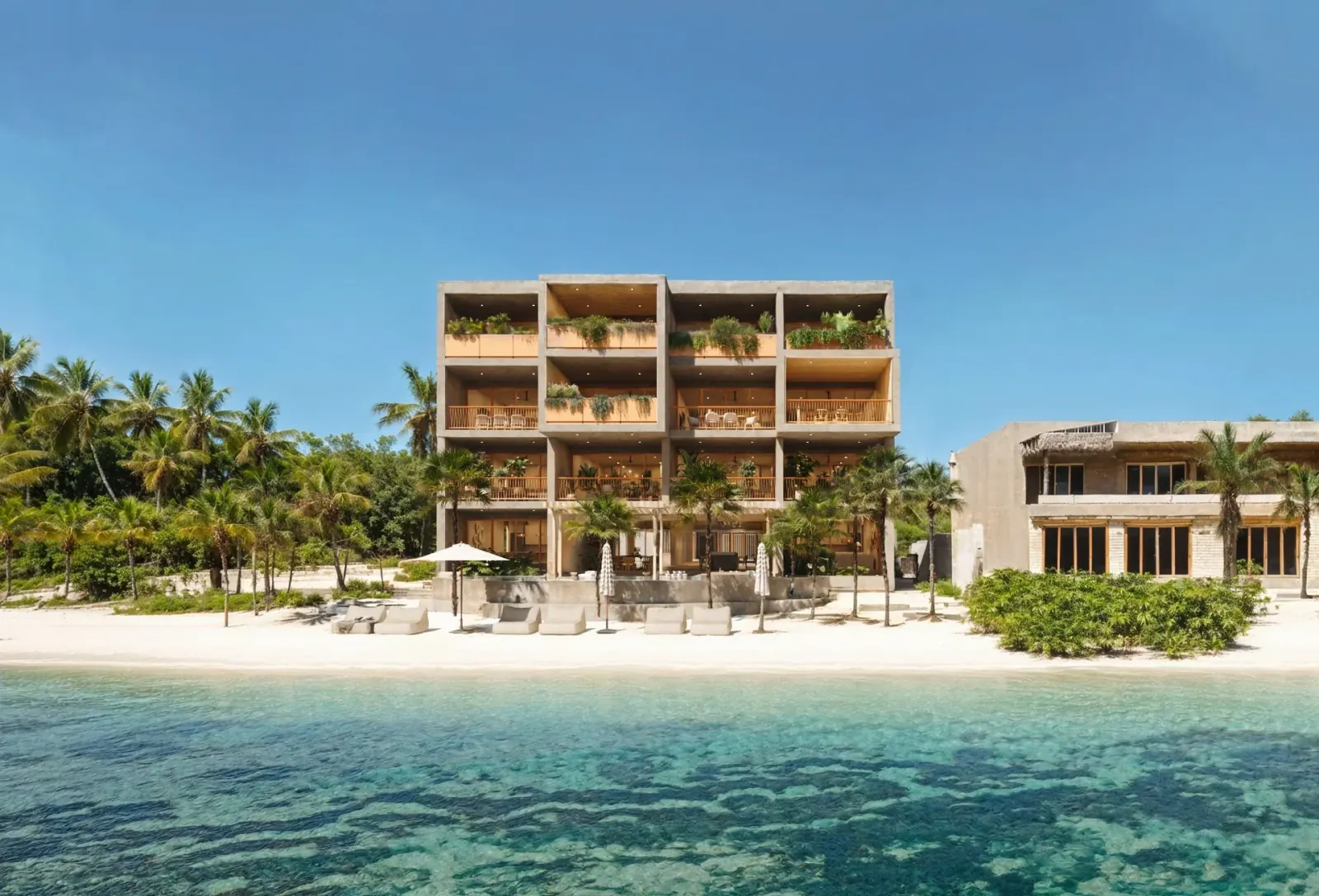
The Casa Cenote bay: beachfront villas, a boutique hotel and residences next to Cenote Manati and the reef lagoon.
Exclusive villa
 Exclusive villa
 Exclusive villa
 Immediate delivery
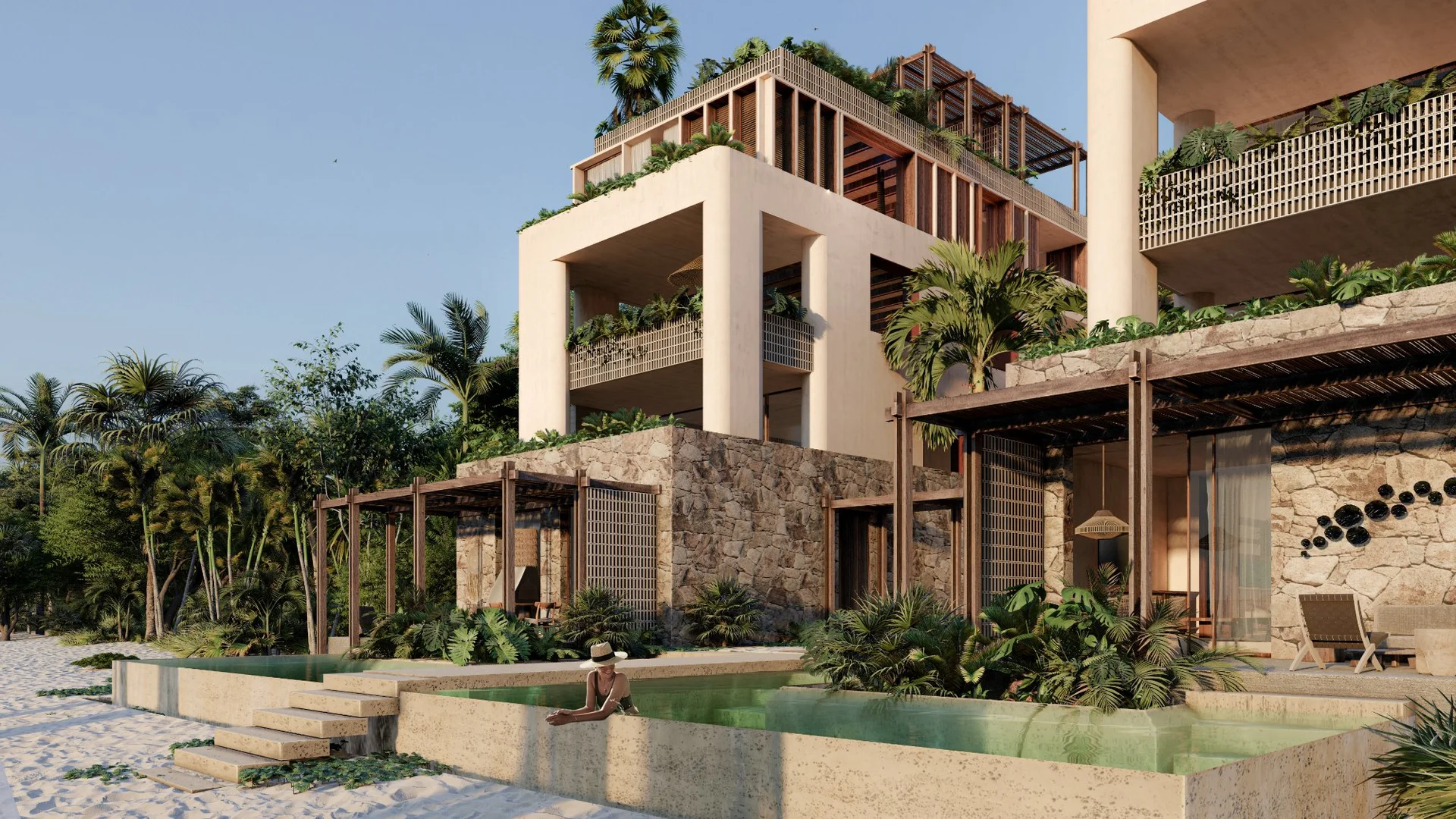 Immediate delivery
The gated private bay: a single line of beachfront villas protected by mangrove and reef.
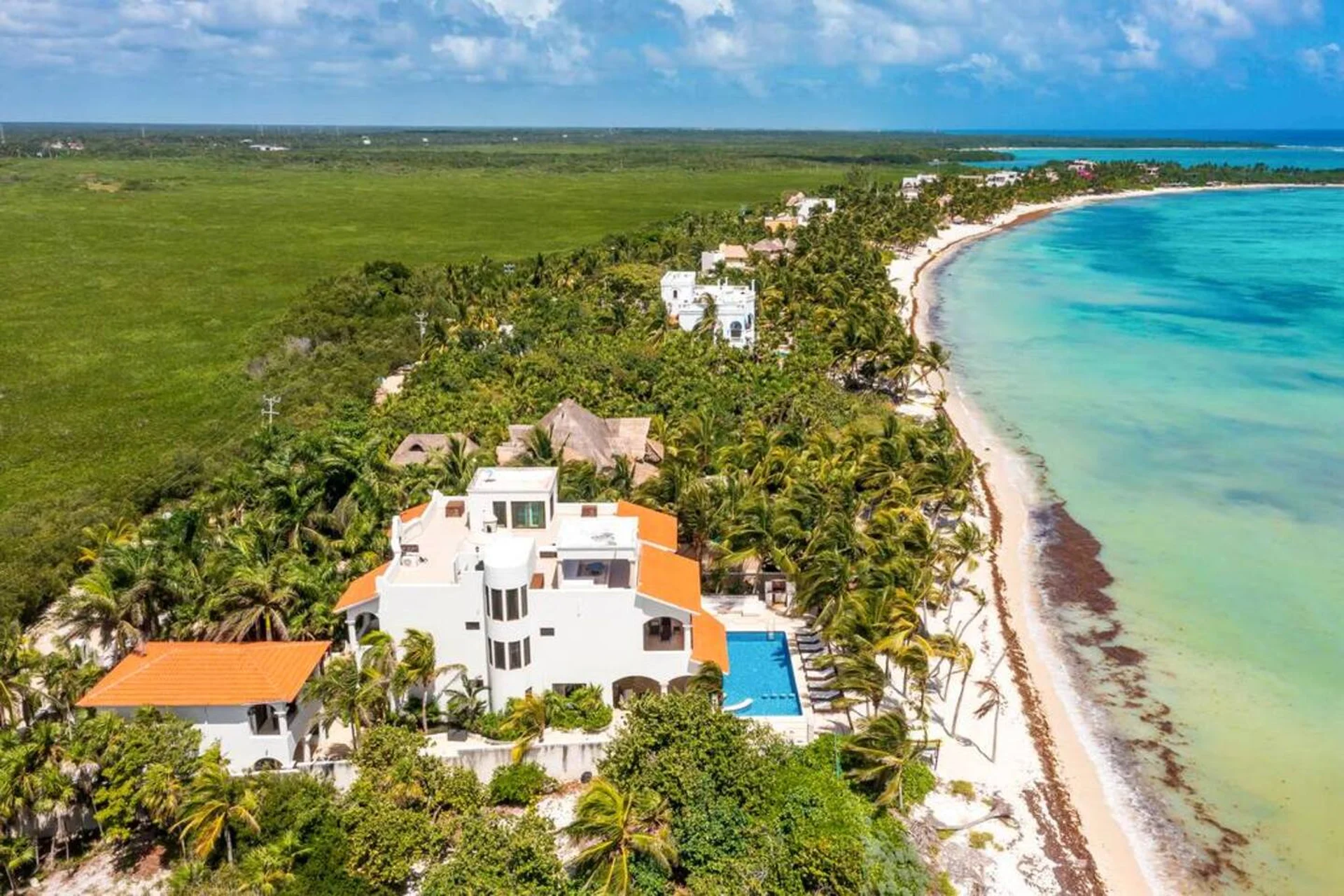 Exclusive villa
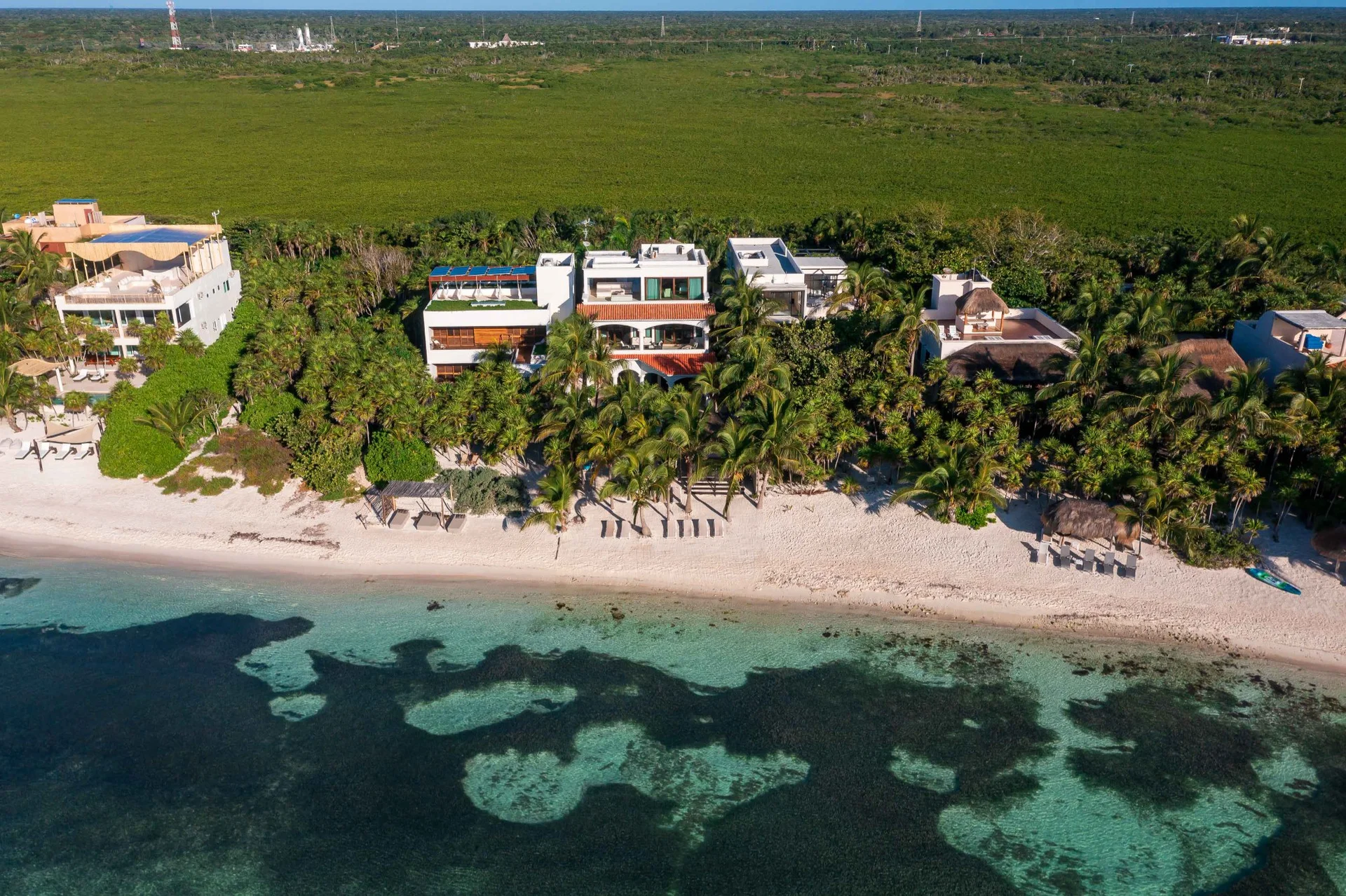 Exclusive villa
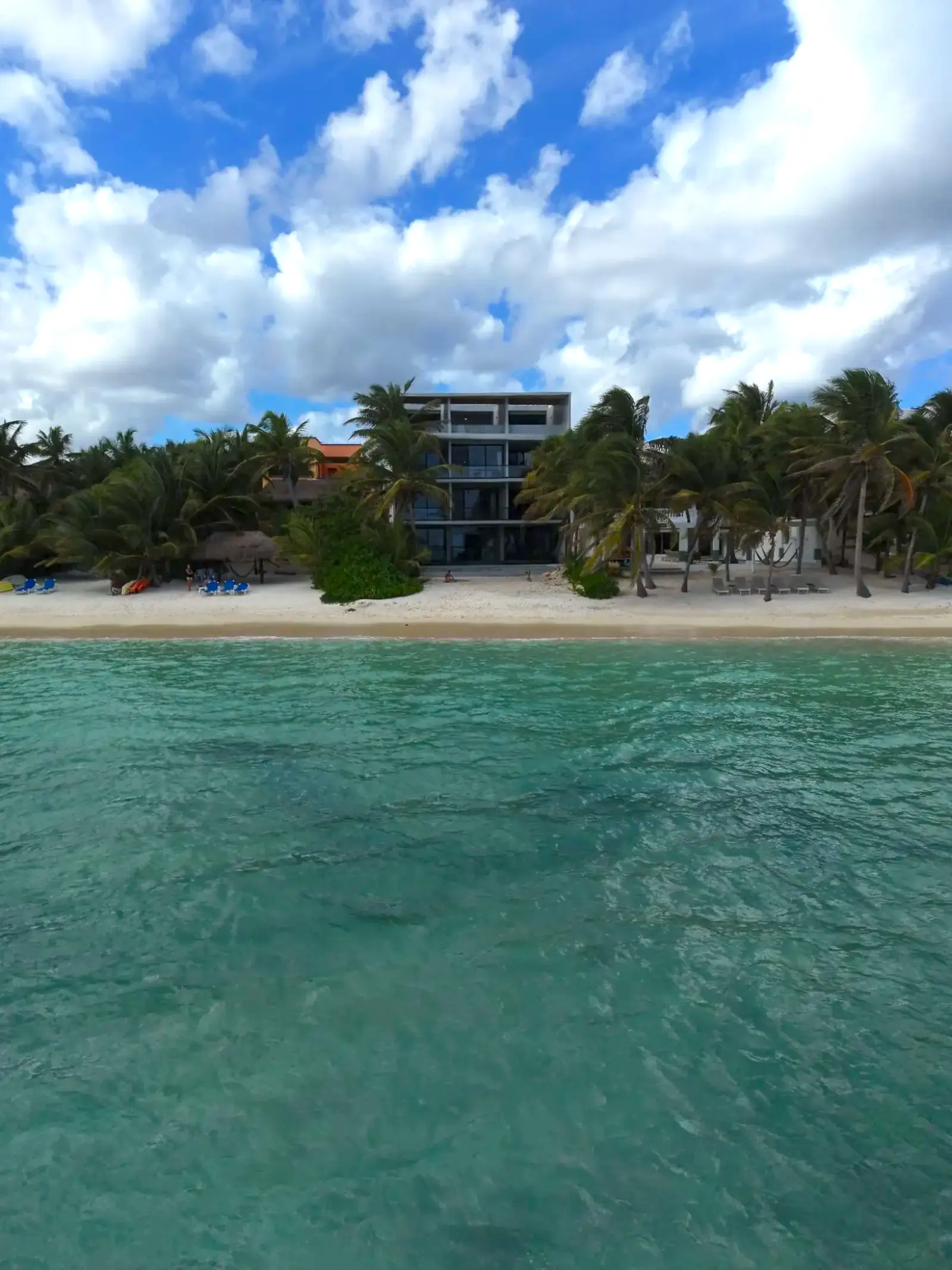 Immediate delivery
 Immediate delivery
Protected bays, Conservation zoning and real beachfront scarcity: Tulum's low-density northern corridor.
When coral encircles the shore and dampens the waves and currents, a reef lagoon forms: shallow (2-4 m), calm water. Here it is created by the Mesoamerican Reef, the world's second-largest coral barrier — snorkeling from shore, kayaking and paddleboarding year-round. Seagrass meadows host green and hawksbill turtles; nesting on Tankah's beaches from August to November. The sheltered geography also means less sargassum than the open beach, and Soliman has operated offshore barriers since 2019.
Cenote Manati (km 246) is the final stretch of the Sac Actun cave system before reaching the Caribbean: a ~250 m navigable channel through mangroves, brackish water mixing freshwater and marine species, diving suitable for a basic Open Water certification (6-8 m), and home to “Panchito,” the Morelet's crocodile gone viral on social media. A tourism and lifestyle anchor unique in the Riviera Maya, minutes from every property.
UGA 7 of the POET Cancun-Tulum classifies the strip under Conservation policy: max height 12 m (6 m on the beachfront line), 30 rooms per hectare, land clearing capped at 15% per lot, a 40 m Federal Zone setback and an express ban on golf courses and docks. Every project requires an environmental impact statement before SEMARNAT. The low skyline is not a marketing promise — it is published law.
In Soliman Bay, protected mangrove prevents building behind the beach road: a single line of villas, with no second row possible. Only 8% of Tulum's vacation rental supply has 4+ bedrooms (AirDNA), and local brokers consider this corridor one of the last developable beachfront strips: to the south, Sian Ka'an blocks the coastline.
The top 10% of the Tulum market achieves $373+ USD ADR and 69%+ occupancy (AirROI 2025-26), and Soliman's beachfront villas publish rates of $1,000 to $2,300+ USD per night with chef and staff (Casa Xixim, Villa Mariola, Villa Lol Beh). A low-supply, high-ticket market — a different game from the generic Tulum-centro condo. These are destination and third-party villa rates, not your unit's: Nautilus publishes no yield or occupancy figures.
Tulum International Airport (TQO, opened Dec-2023, ~40-50 min) moved 1,248,645 passengers in 2025 with routes to Houston, Atlanta, Dallas, Miami, Newark, Mexico City and more. The Maya Train's Tulum station sits north of town —the same side as the corridor— and the ruins are ~10 min away. Playa del Carmen in 40-50 min, Cancun in ~90.
Two of the developments in this bay let you sleep there before you decide. Sleep in the unit, walk the bay, wake up there on an ordinary Tuesday. Your accommodation comes off the price of your purchase, and so do your flights, up to a cap. It is a discount on what you pay, not a separate refund.
See the full terms and the confirmation date →Three different ways to buy in Tulum: protected residential bay, iconic beach-hotel strip, or urban master plan.
| Attribute | Tankah · Soliman Bay | Tulum Hotel Zone | Aldea Zama |
|---|---|---|---|
| Character | Private residential bays · low-density | Iconic beach-hotel corridor | Urban master plan between jungle and beach |
| Beach | Reef-protected bay · calm sea 2-4 m | Open beach with surf | No beach of its own (5-10 min drive) |
| Sargassum | Lower incidence · offshore barriers since 2019 | Higher seasonal exposure | Not applicable |
| Height allowed | 12 m max (6 m on beachfront line) · POET UGA 7 | Consolidated hotel zone | Low-to-mid-rise buildings |
| Typical product | Beachfront villas + boutique condos | Boutique hotels and condo-hotels | Condos, lofts and retail |
| Atmosphere | Residential quiet · more residents than tourists | Beach clubs · nightlife | Urban-boho · cafes and coworking |
| Vacation rental | Villas $1,000-$2,300+ USD/night (top tier) | Hotel-grade · high tourist demand | Condos · market avg ADR ~$203 USD |
| Nautilus inventory | 9 properties | 2 properties | 1 property |
| Access | Private roads with gatehouse | Boca Paila Ave. | Urbanized streets |