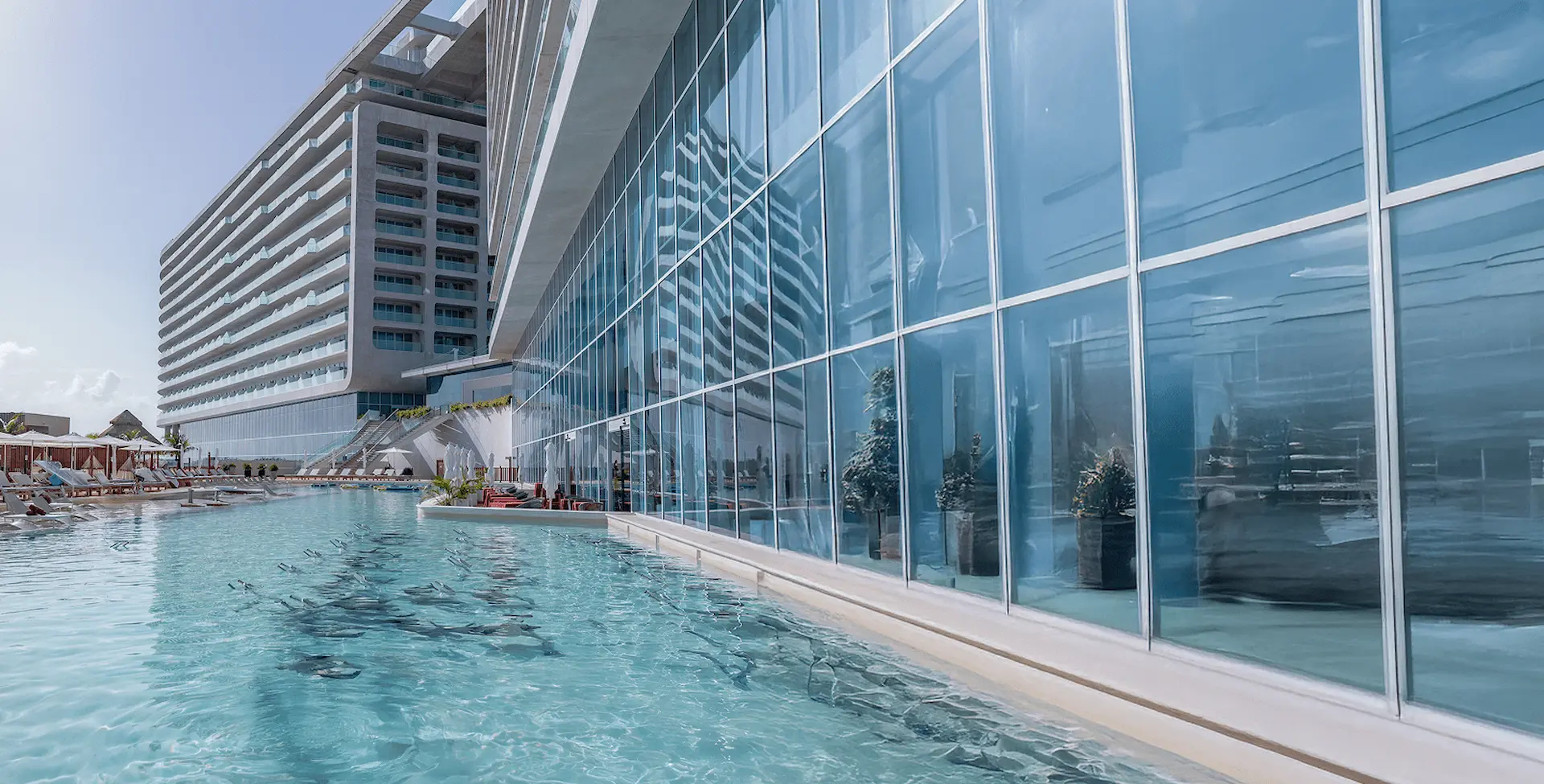
 Pre-sale
Hotel Zone · Mondrian branded residences · MXN
From $10,000,000 MXN
View project
The roughly 22 km barrier island facing the Caribbean Sea is the most liquid, year-round-demand vacation rental corridor in the Mexican Caribbean, with immediate beachfront and resale depth; here we also tell you the real costs almost no one mentions before signing: an effective ISAI of ~3.3%, a mandatory bank trust (fideicomiso), HOA fees and the federal ZOFEMAT concession on the beach.
Cancun's Hotel Zone is a barrier island roughly 22 km long, shaped like a «7» that separates the Nichupté Lagoon from the Caribbean Sea and is traversed end to end by a single road, Boulevard Kukulcán, from KM 0 in the city center to Punta Nizuc, next to the airport. It is above all a tourist corridor, not a pure residential neighborhood, and that same mass tourism is exactly what makes it the most liquid, year-round-demand vacation rental market in the entire Riviera Maya corridor.
This guide is deliberately honest. The Hotel Zone has real advantages — immediate Caribbean beachfront, resale depth and consolidated international demand — but also 1970s legacy inventory with salt-air wear, high maintenance fees (HOA) and rental rules that change building by building. Nautilus verifies prices, legal structure and real costs so you know exactly what you're getting into: when the Hotel Zone is the right call and when Puerto Cancún is the better fit.
Today we manage 3 verified properties in the area: Mondrian Residences Cancún (formerly The Residences at Grand Island, rebranded to Accor/Ennismore Mondrian in 2026), with a studio loft available from $10,000,000 MXN; Kaána Hotel Zone, a 6-bedroom, 924 m² resale penthouse at $9,500,000 USD — the largest unit available in the area; and Bay View Grand at Grand Island, a pre-sale with delivery in December 2028 from $586,146 USD. The entire island lies within the 50 km restricted zone, so foreign purchases are made through a bank trust (fideicomiso).
Inventory verified by Nautilus Real Estate with real availability and updated pricing — a mix of available product, strategic resale and institutional pre-sale.
Pre-sale
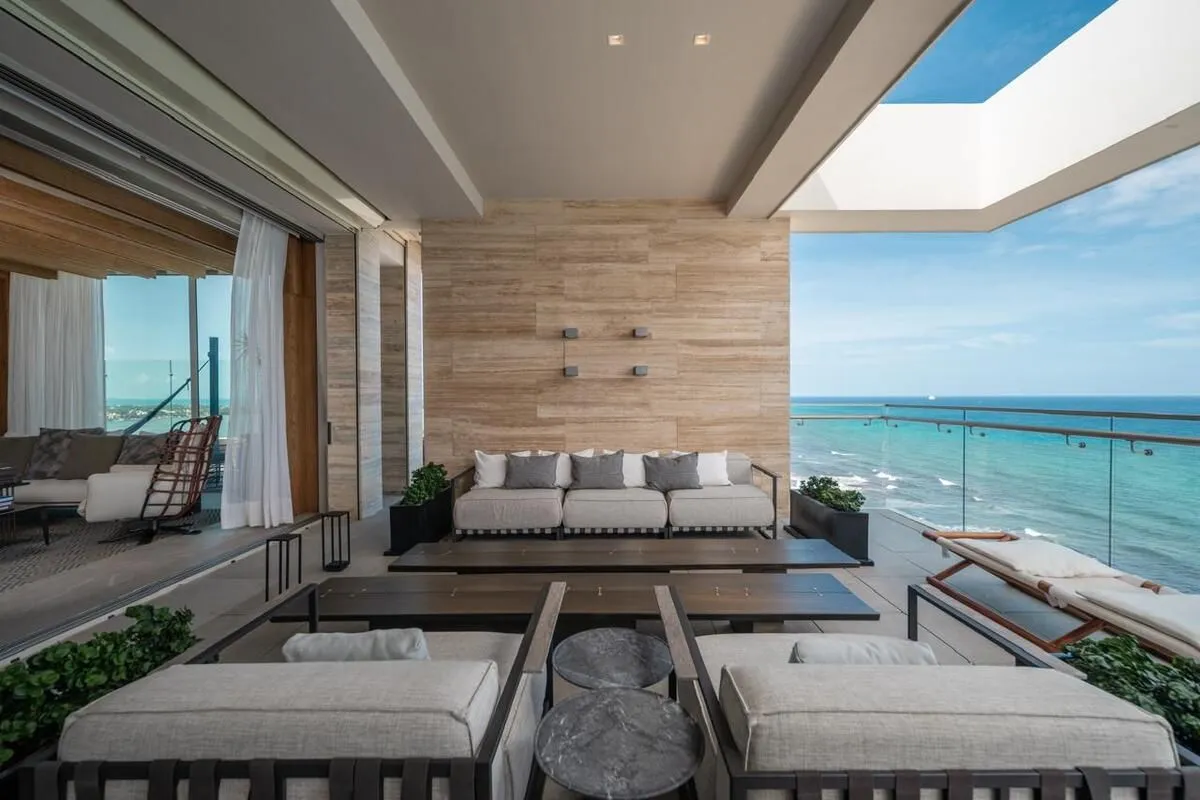 Resale
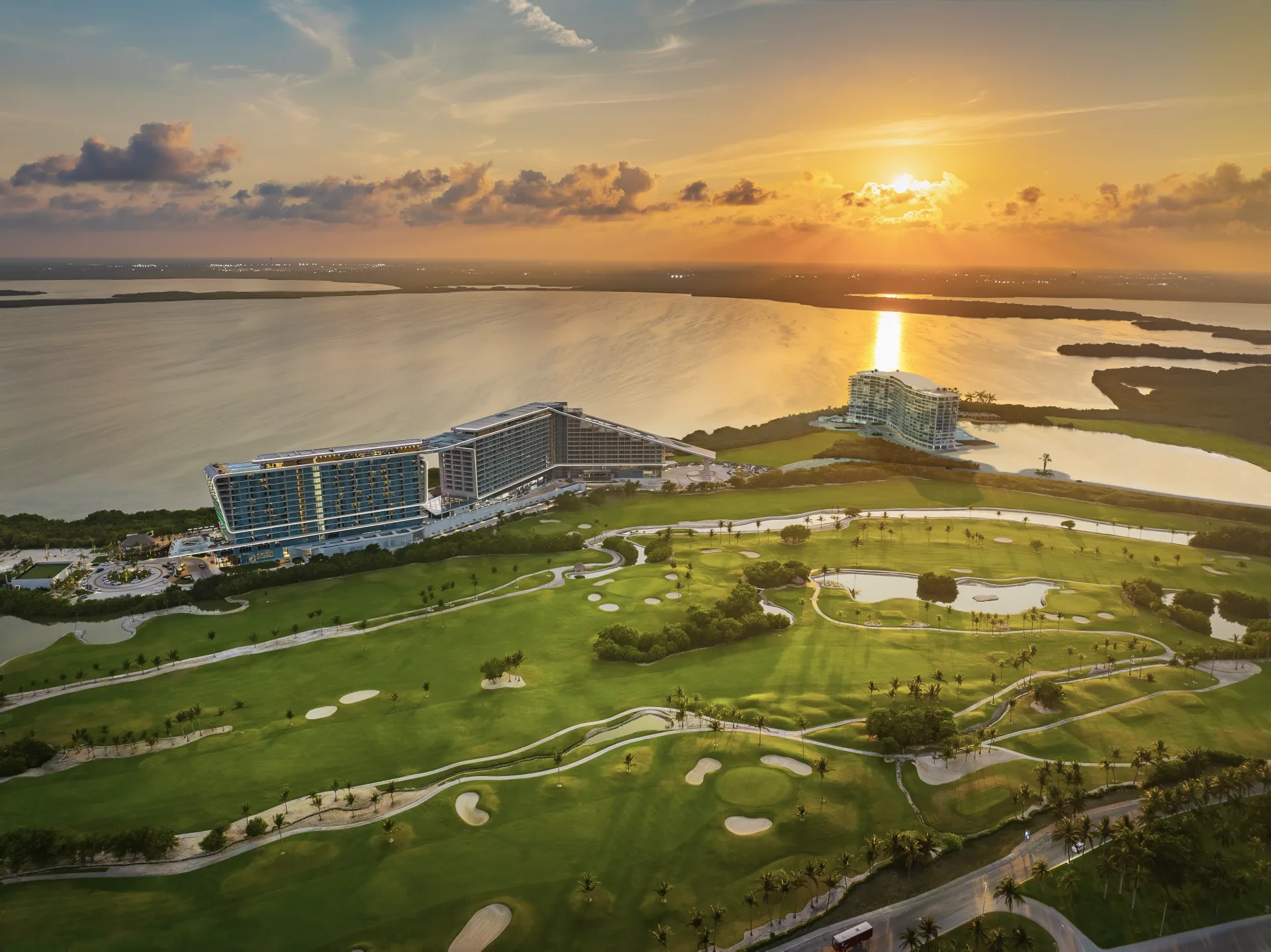 Pre-sale
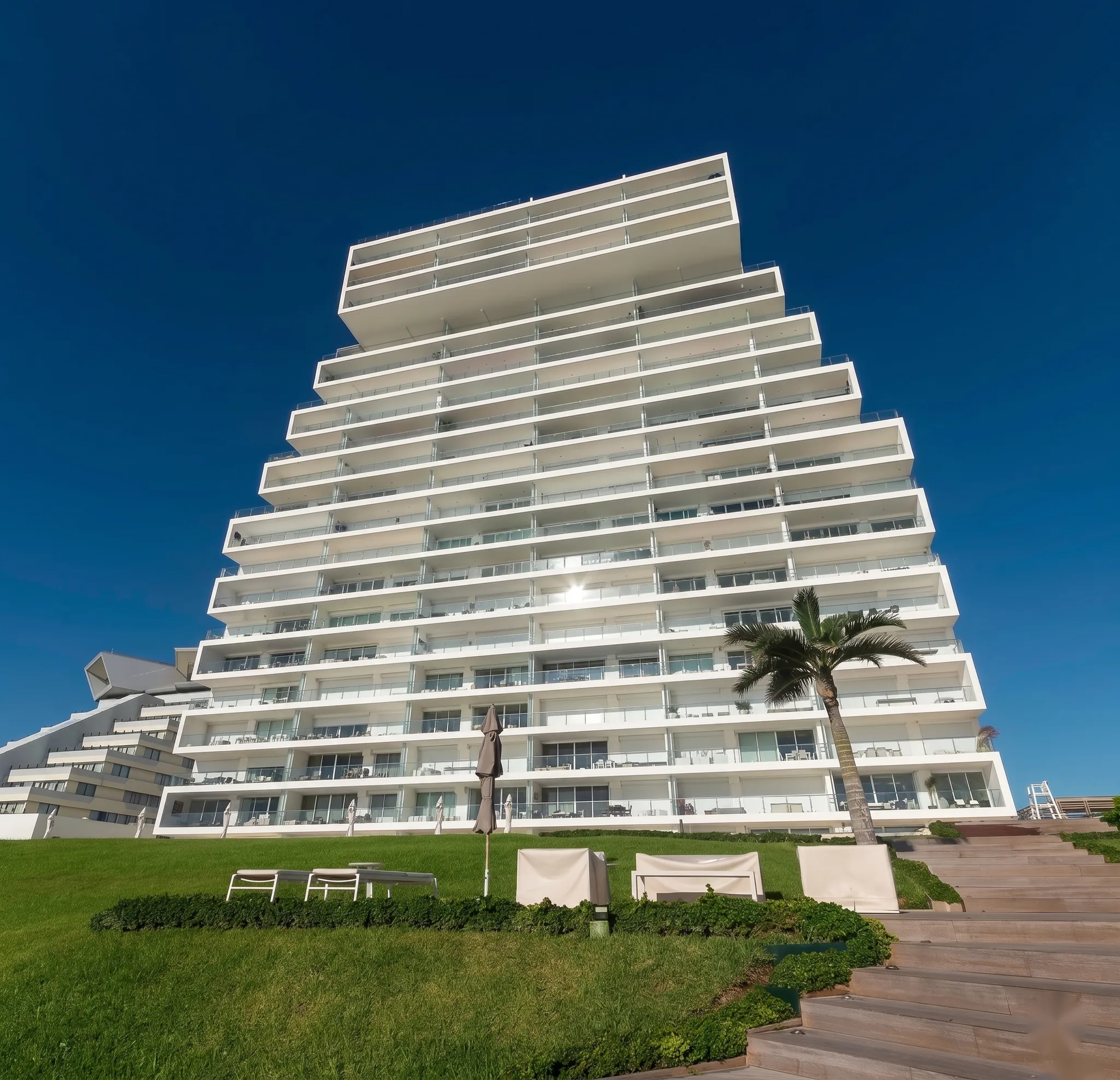 Resale
 Coming Soon
 Pre-sale
The real reasons to buy here — and the costs no one tells you about before signing. This is what truly matters.
Cancún welcomes more than 7 million international visitors a year and operates one of Latin America's busiest airports. That makes the Hotel Zone the vacation rental market with the highest liquidity and year-round demand in the corridor.
While condo prices in Tulum fell around −47.6% cumulatively between 2023 and 2025 (its deepest correction), Cancún rose approximately +12–14% nominal over that same period. The difference: Cancún has mass tourism, an international airport and a diversified economy; Tulum was a speculative pre-sale market where oversupply outpaced demand.
The ISAI in Cancún is 3% of the value plus a 10% surcharge on the duties — an effective rate of ~3.3% (not the «flat» 2.5% some mistaken sources cite). Since the entire island is in the 50 km restricted zone, foreigners buy through a bank trust (fideicomiso): setup ~USD 2,000–3,000 (includes the SRE permit ~MXN 21,650) and an annual fee of ~USD 500–900. Estimated total closing: 6–8%.
Be realistic with the numbers: the verified return in the Hotel Zone is ~5.7% gross / ~3.4% net. Operations consume 35–50% of gross, professional management 15–25%, and the HOA runs USD 250–600+ per month — the highest fixed cost, and higher in branded towers. Be wary of promises of «8–12% yield» or «80% occupancy»: those are top-tier scenarios, not the market average.
Even if you buy «beachfront,» the beach is never yours: the first ~20 m from the high-tide line are ZOFEMAT, inalienable federal public domain. Buildings operate it through a federal concession (held by the HOA, with limited validity and an annual fee). There is a documented history of irregular concessions in the area, so due diligence on the concession and the title (full ownership, not ejido land) is indispensable.
Immediate Caribbean beachfront (Playa Delfines and its CANCÚN letters, Playa Marlin, Playa Chac Mool), shopping centers along the boulevard (La Isla Shopping Village, Kukulcán Plaza with Luxury Avenue) and nightlife at Punta Cancún. Cancun International Airport is ~30 min away and downtown ~20–30 min. The reference hospitals (Hospiten, Galenia, Amerimed) are a short distance on the mainland.
Three distinct profiles for investing in Cancún. Choose the one that best fits your goal.
| Attribute | Hotel Zone | Puerto Cancún | Costa Mujeres |
|---|---|---|---|
| Zone profile | Barrier-island tourist corridor (1970s) | 327 ha resort master plan (U-Calli) | Zone in tourism consolidation |
| Immediate Caribbean beachfront | ✓ Immediate (Playa Delfines, Marlin) | Marina access + private beach club | ✓ Calm Bahía de Mujeres beaches |
| Liquidity / resale depth | ✓ The highest in the corridor | High, consolidated market | Medium, newer inventory |
| New construction vs legacy | Mix: 1970s inventory + new construction | ✓ Planned new construction | ✓ Recent new construction |
| Distance to airport | ~30 min | 20 min | 35-45 min |
| ISAI Cancún (Benito Juárez) | ~3.3% effective | ~3.3% effective | ~3.3% effective |
| Bank trust (50 km restricted zone) | ✓ Mandatory | ✓ Mandatory | ✓ Mandatory |
| Verified net return | ~3.4% net (~5.7% gross) | ~3.4-3.9% net | ~4.5-7% gross by project |
| Beach in front of the building | Federal ZOFEMAT concession (not owned) | Concession / private beach club | Federal ZOFEMAT concession |
| Buyer profile | Vacation rental + beach + resale | Urban + nautical + golf mix | Entry-price |